
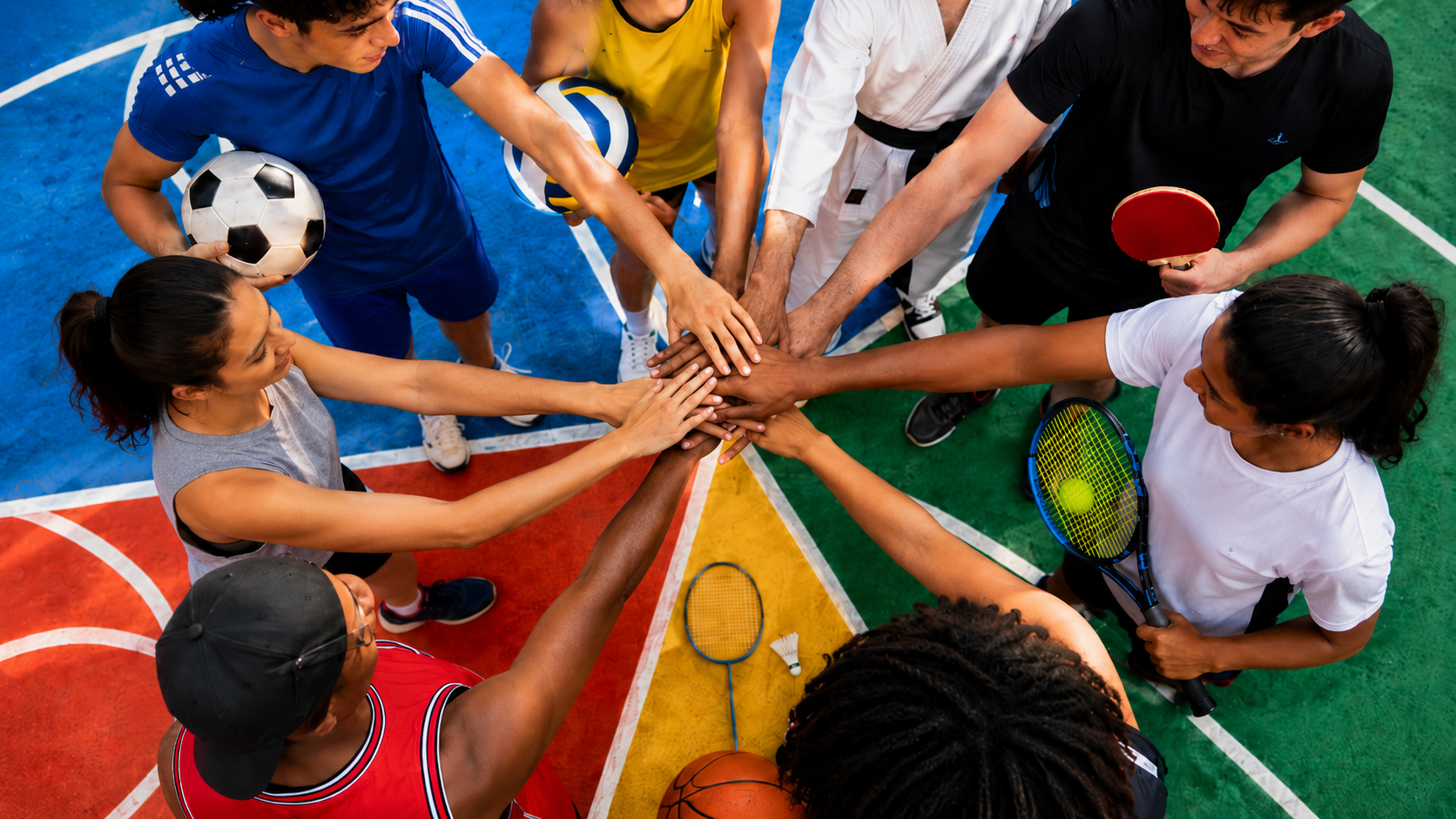
When the 2026 FIFA World Cup kicks off on 11 June in Mexico City, much attention will be on one of the world’s largest sporting events. According to a Bank of America Report, 48 national teams and an estimated 6 billion people will engage with the tournament across broadcast, streaming and social media. Sport has long served as more than athletic competition or entertainment; it has also provided a useful platform for engagement, such as the historic 1971 US table tennis team’s visit to China and more recently, North Korea’s participation in Seoul in the Asian Women’s Champion League. The United Nations see sport as a tool that can contribute to mutual understanding, peace, development and social inclusion, bringing people together as athletes, coaches, spectators, fans, tourists, etc and creating spaces for people-to-people connection.
In Asia and Europe, sports have contributed to exchanges between countries and communities within and outside the region. Asia-Europe ties are growing through sports, notably football, such as via youth development partnerships between European clubs and Asian football associations and a steady flow of Japanese and South Korean players to European leagues. Regional competitions such as the SEA Games and Asian Games, bring together thousands of athletes across dozens of disciplines, building a sense of shared regional identity that complements political and economic integration. In Europe, the UEFA tournaments serve a similar function, sustaining regular exchange and building familiarity among diverse nations. The EU’s Erasmus+ Programme allows grassroots sports organisations in Europe to partner with nations globally, including countries in Asia.
Detractors, including racism, cheating, match-fixing and the politicisation of sport exist, and addressing these challenges requires sustained effort from governing bodies, athletes, fans and governments alike. FIFA’s revised 2025 Disciplinary Code, adopted unanimously at the 74th FIFA Congress, introduced a formal three-step anti-discrimination protocol to allow match officials to respond to racist incidents during play. It is one step and highlights that the positive role of sports cannot be taken for granted; it needs to be promoted and protected.
Sources:
FIFA, ‘2026 FIFA World Cup Canada, Mexico and United States’, FIFA
United Nations, ‘Sport for Development and Peace’, UN
Southeast Asian Games Federation, ‘SEA Games History’, SEAGF
Olympic Council of Asia, ‘Asian Games’, OCA
UEFA, ‘UEFA Official Website’, UEFA
US Department of State, Office of the Historian, ‘Rapprochement with China, 1972’, history.state.gov
North Korea’s powerhouse women footballers are in Seoul to fight for title
IOC, 19 March 2024, ‘Declaration by the IOC against the politicisation of sport’, IOC
FIFA, 2024, ‘Global Stand Against Racism’, FIFA
UNESCO, 6 April 2026, ‘International Day of Sport for Development and Peace’ UNESCO
I like the idea that sports create people-to-people connections. It’s something we need more of in today’s world.
Thanks for your thoughtful comment – so true!
The article makes a good point about sport as diplomacy. We’ve seen this in Asia too, especially during events like the Asian Games.
Thanks for picking up on this, Seoks!